
Game Is Serious Studio
Soft skills are not learned from slides. Your team practises them in play.
Game Is Serious runs workshops in Berlin where teams practise feedback, hard conversations, and decisions by playing. You leave with one page on what the group noticed.
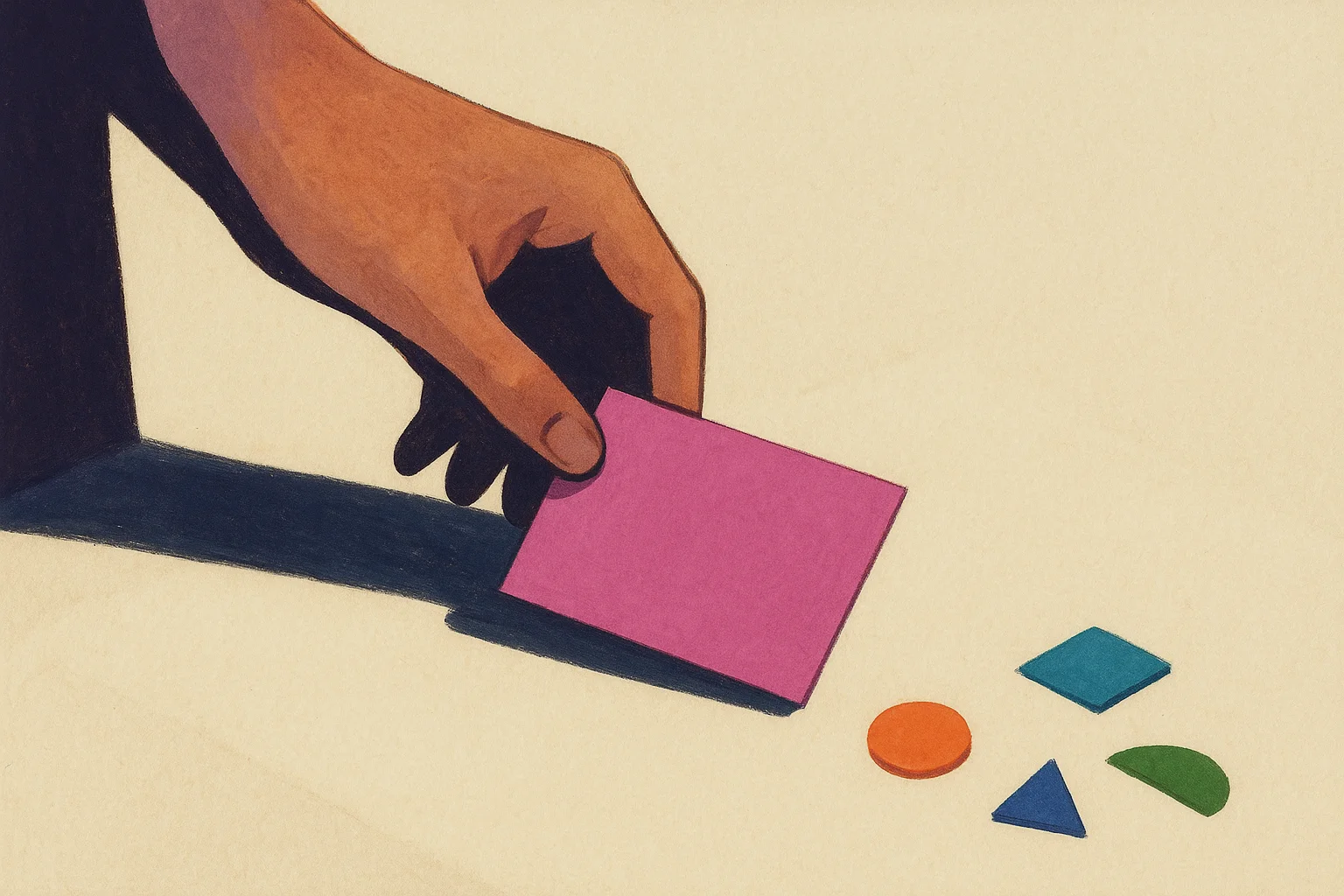
Soft skills are like morals: everyone agrees, and hardly anyone does them.Sohrab Mostaghim, founder
Agreeing is easy. Doing is the point.
Ten years ago Sohrab Mostaghim sat in a soft-skills workshop himself. Everyone agreed: honesty is good, teamwork is good, creativity is good. You can lecture on that for a whole day and everyone nods. On Monday, people still do what they always did. A game does not ask for agreement. It gives the team a goal, a little pressure, and a situation built for the skill. What happens next is the material: who speaks, who waits, who decides, where a piece of information gets stuck. That is what we talk about afterwards, not how much everyone values teamwork.

Half day or full day
A feedback workshop: a hard conversation, practised once in safety.
Feedback, a conflict, a decision. The group plays a short round, then talks about what happened.

For L&D and HR
A gamification workshop: take a game apart, and start one of your own.
The group plays, takes the mechanics apart, and leaves with a first design for their own case.
What a round makes visible.
You pick two or three skills. We build the rounds so those are the ones that show up in play.
- Feedback
- Does it get said, or only thought? And how does it land?
- Conflict
- Who backs off, who pushes, and how does it end?
- Listening under pressure
- What still gets heard when time runs short.
- Deciding together
- Who decides, and whether the others follow.
- Working across roles
- Where knowledge gets stuck, between people and between teams.
- Everyday conversations
- A retro, a 1:1, a peer conversation, practised once with nothing at stake.
How a workshop runs.
- On the intro call we pick two or three skills and talk through the group.
- The team plays short rounds, each with a clear goal.
- After every round we talk while the moment is fresh: what happened, and where does it happen in your week?
- Afterwards you get one page: what happened, what the group noticed, next steps. No personality labels.
Up to 20 people, up to 30 on request. A half day is 3.5 to 4 hours, a full day about 7. In Berlin or at your office, elsewhere on request. In English or German.
Games we use.
- Code Decoder: The team decodes its mission, vision and values together.
- Who Knows What: Shows where knowledge sits in a team, and who holds it.
- Meteorite: Three tables share signals, and win only when every seat finds its fragment.
- AgileOps: Sprint planning, WIP limits and a retrospective in a 90-minute simulation.
Afterwards each person can practise short scenes from team life in Team IQ: a retro, a 1:1, a peer conversation. That is practice, not a sales tool, and not a personality test. More on Team IQ.
Before Game Is Serious, Sohrab Mostaghim ran his own game studio and designed many workshop-games on feedback, communication, and team events for companies. Since 2016: 200+ sessions across 60+ organisations.
Looking for a day out together rather than training? Then a team event fits better.
Questions before the intro call
Is this a business game?
Yes. The group acts inside a designed situation, then talks about it. It is not an escape room and not a slide course.
How many people?
Up to 20, up to 30 on request.
How long?
A half day is 3.5 to 4 hours, a full day about 7.
Can it run online?
The workshop happens in the room. Team IQ, the practice afterwards, runs online.
Can you come to us?
Yes, in Berlin. Elsewhere on request.
Do we need Team IQ?
No. Team IQ is optional practice afterwards. It is not required.
Which language?
English or German.
Does this replace a communication course?
It is the course: people practise the conversation instead of seeing it on a slide.
What do we get in writing?
One page at the end: what happened, what the group noticed, next steps. No personality labels.
Is it fun, or is it learning?
Both. Every round has a goal, and after every round we talk about what the team actually did. That keeps it close to work.
Will anyone be put on the spot?
No. We talk about what happened in the round, not about who someone is. Nobody gets a label.
Tell us which two skills should come first.
Rather talk directly? Message us on WhatsApp.
Running a sales team? Game Is Serious also makes an AI sales simulation platform.